

October 16, 2026 · Dismissal reported
Katie Zacharia
Five days at the podium before Trump urged her to reconsider the job.
Follow her record →︎People & institutions
A president can fire an official. He cannot make an investigation, an election result or a weak jobs report disappear. Across two terms, Trump’s response to unwelcome information has repeatedly put the people delivering it at risk.
Explore 41 records ↓︎The second term · Women leaving power
On October 13, 2026, Katie Zacharia announced that the White House had asked Kimberly Guilfoyle to resign. By October 16, her own dismissal was being reported. In three days, the woman delivering the news of another loyalist’s departure had become the story herself.
Look beyond that extraordinary week and the list grows. Kristi Noem, Pam Bondi and Lori Chavez-DeRemer were the first three Cabinet secretaries to leave Trump’s second administration. All three were women. Tulsi Gabbard’s resignation followed in May. These were people Trump had chosen to wield power in his name. Their exits raise an uncomfortable question for anyone still doing that work: how much protection does loyalty actually buy?
October 16, 2026 · Dismissal reported
Five days at the podium before Trump urged her to reconsider the job.
Follow her record →︎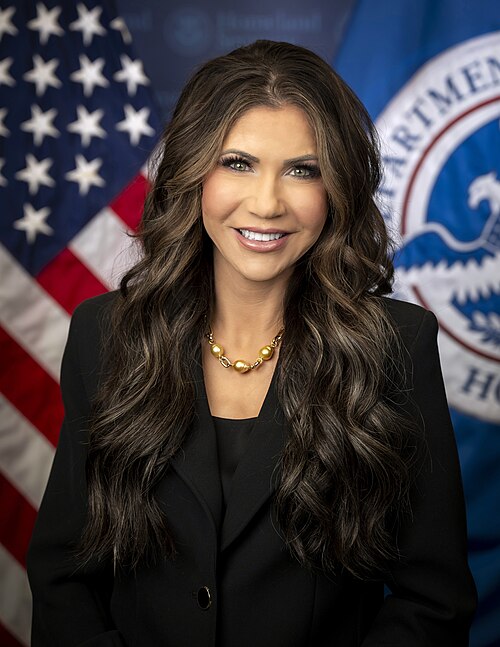
March 5, 2026 · Removal announced
Lost her Cabinet seat, then received a diminished role as a special envoy.
Follow her record →︎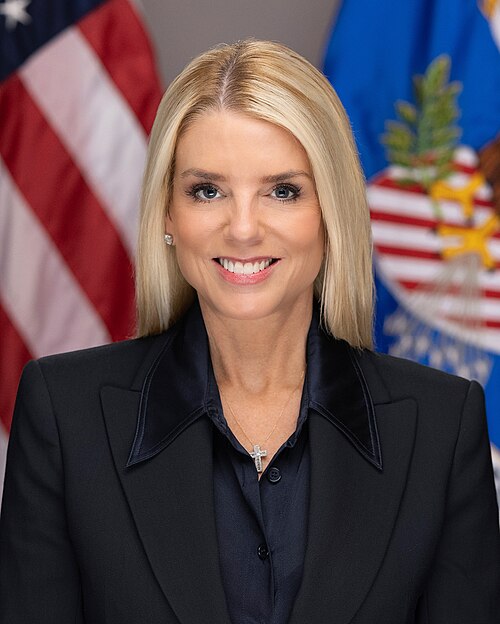
April 2, 2026 · Dismissed
An early Trump loyalist and impeachment defense lawyer, removed as attorney general.
Follow her record →︎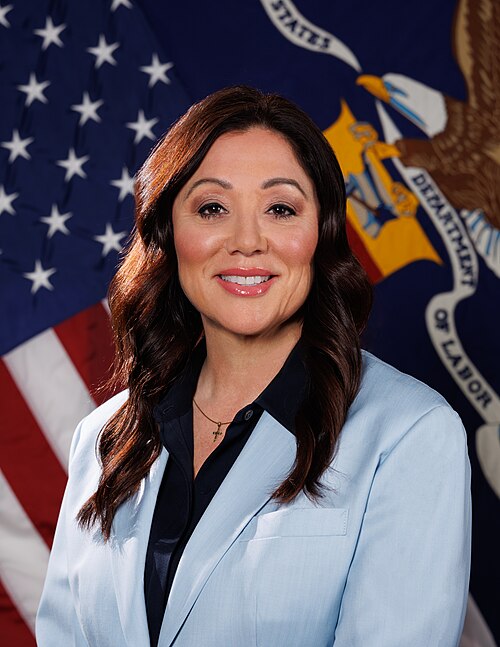
April 20, 2026 · Resigned
Left the Labor Department amid misconduct allegations; a later watchdog report found multiple policy violations.
Follow her record →︎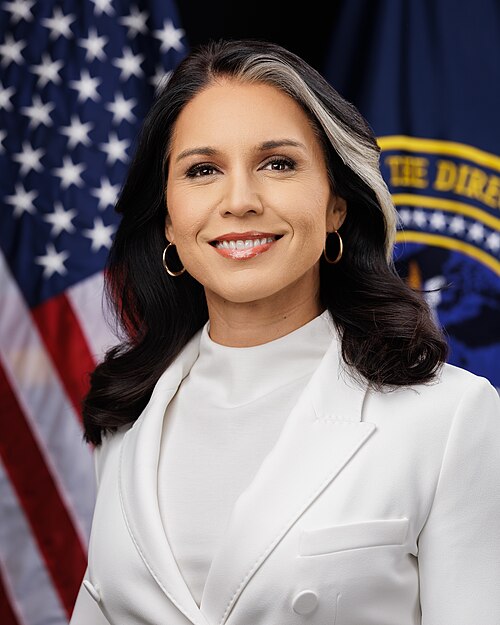
May 22, 2026 · Resignation announced
Cited her husband’s illness. Reuters separately reported that the White House had forced her out.
Follow her record →︎
October 13, 2026 · Asked to resign
Left the embassy in Greece amid allegations she disputed. Zacharia announced the White House’s request.
Follow her record →︎The individual records deserve scrutiny. Bondi’s removal did not settle the questions about the handling of the Epstein files. Noem’s departure did not undo the administration’s immigration policies. And Zacharia’s brief tenure did not erase Trump’s decision to put someone with a history of conspiracy posts and false health claims behind the White House podium.
At Labor, the inspector general subsequently found multiple policy violations under Chavez-DeRemer. Guilfoyle denied the allegations surrounding her resignation; the family-business investigation follows that dispute. Gabbard publicly cited her husband’s cancer diagnosis, while Reuters, citing a person familiar with the matter, reported that the White House had forced her to resign. The circumstances differed, but the result was a succession of prominent women leaving positions Trump had given them.
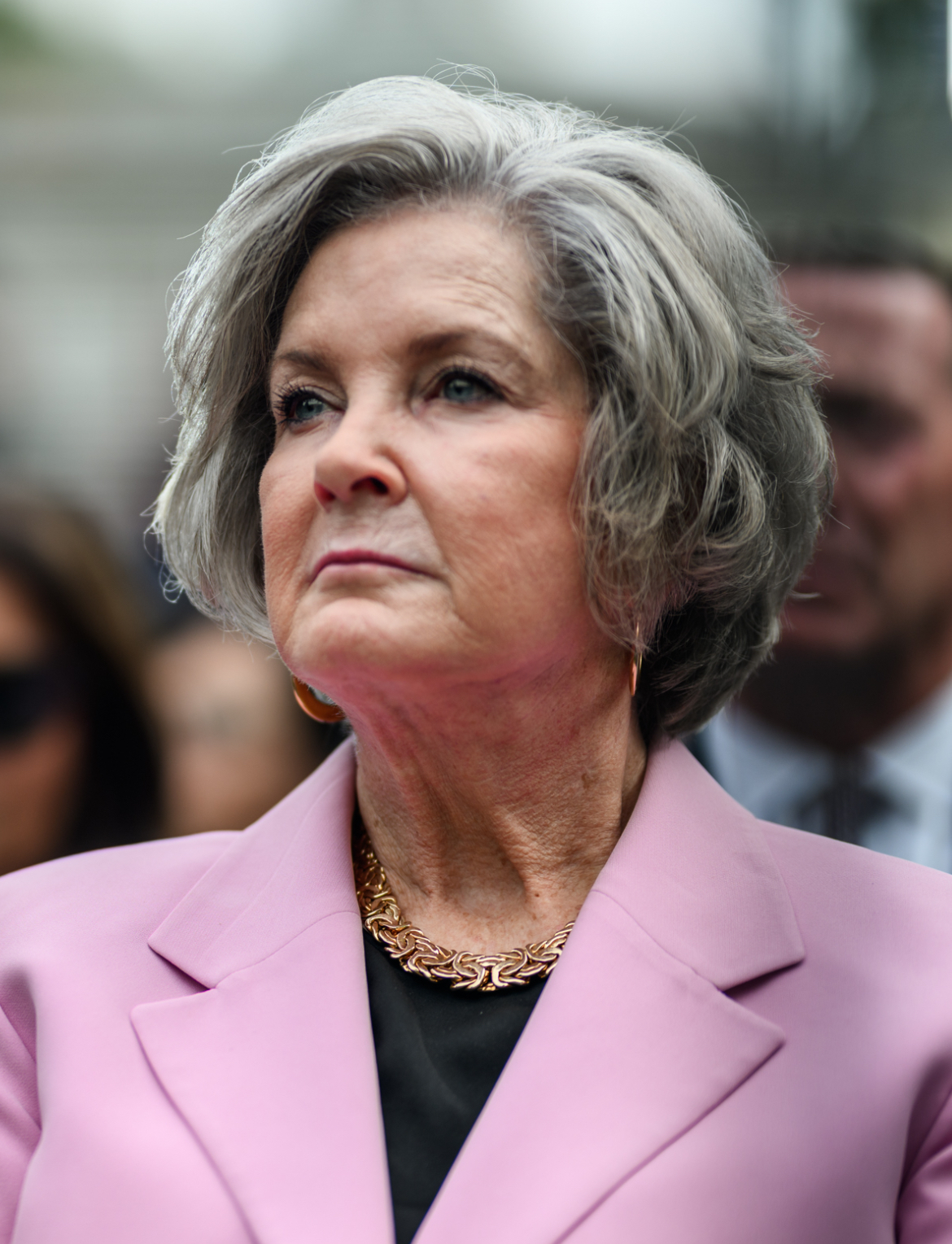
November 6, 2026 · Susie Wiles
Susie Wiles helped return Trump to the White House and became the first woman to serve as its chief of staff. After Republicans lost both chambers of Congress, she lost that job. Trump announced on November 6 that Stephen Miller would replace her. ABC News, citing sources, reported that Trump had privately blamed Wiles for the midterm losses; she submitted her resignation on November 5.
Her departure reached the center of Trump’s operation. The woman entrusted with running his White House was leaving after an election he had urged voters to treat as a verdict on him. Trump said she would move to his political operation. Wiles’s public response was another declaration of loyalty: “While my role may be changing, my commitment to the President and the mission never will.”
The replacement matters too. The White House’s November 6 announcement named Stephen Miller as Wiles’s successor. The official celebration of his appointment drew praise from across the Cabinet. After voters rejected the Republican Congress, Trump had removed the woman who ran his White House and promoted the aide at the center of his immigration crackdown. The arrests continued after the election; the aftermath follows the shift in power.
Mike Waltz lost the national security adviser’s job after the Signal controversy, but Trump nominated him for the United Nations. Billy Long was removed as IRS commissioner and offered an ambassadorship in Iceland. Losing one job did not mean losing the president’s patronage. Noem received another post too, as a special envoy. It carried less power, but kept her inside the administration.
The Signal affair also exposed a difference within Trump’s team. Waltz had added a journalist to the chat; Pete Hegseth had shared the military plans. Trump backed both men in the immediate aftermath. Waltz was later moved, while Hegseth remained defense secretary. Hegseth’s dossier follows his record; Waltz’s follows his return in a diplomatic role.
Men have been dismissed outright as well, including General C. Q. Brown and consumer watchdog Rohit Chopra. The question is who gets a second chance, what it takes to lose one, and whether women face a shorter route to the exit. The concentration of women among these prominent departures makes that a question worth pressing. Trump chose the people, set the priorities and demanded their public support. Replacing them cannot wipe away his part in what happened.
Two terms. A record of departures.
James Comey would describe the demand in testimony to Congress: the president wanted loyalty. In the years that followed, the conflict took different forms. An attorney general stepped aside from an investigation. An Army officer answered a congressional subpoena. An election-security official contradicted claims of fraud. Each had responsibilities that extended beyond satisfying the president, and each lost his position. Their cases lead from the private conversations of Trump’s first months in office to public disputes over whether the government can investigate, oversee and report facts independently of the man who leads it.Related passages: James Comey →︎ · IRS data and ICE →︎
01 · A private dinner
James Comey thought there might be other guests. When he arrived for dinner at the White House on January 27, 2017, he found that he and the new president would be dining alone. According to Comey’s prepared testimony, Trump asked whether he wanted to remain FBI director, then told him: “I need loyalty, I expect loyalty.” Comey said he offered honesty and explained the need for the FBI’s independence. He left concerned that the president was trying to turn his continued employment into a personal obligation.
In May, Trump fired him. The dismissal letter cited recommendations from Jeff Sessions and Rod Rosenstein; Trump subsequently told NBC that he had already decided to act and had been thinking about the Russia investigation. The inquiry continued, and Robert Mueller was appointed special counsel. Comey’s removal had made the president’s relationship with federal law enforcement a larger public controversy. It also gave a memorable expression to a conflict that had surfaced elsewhere in the administration almost as soon as Trump took office.Related passages: James Comey →︎
02 · The cost of saying no
Three days after the Comey dinner, acting attorney general Sally Yates instructed Justice Department lawyers not to defend Trump’s first travel-ban order. She said she was not convinced it was lawful. The White House dismissed her that evening, accusing her of betraying the department. In its account, the official charged with deciding what position government lawyers could defend had failed a test of loyalty by refusing to defend the president’s order.Related passages: James Comey →︎ · Sally Yates →︎
Jeff Sessions had a different history with Trump: he was an early ally who became his attorney general. Yet that support did not protect him after he recused himself from the Russia investigation on the advice of department ethics officials. Trump repeatedly attacked the decision, and Sessions was forced out after the 2018 midterms. The dispute concerned whether an ally in charge of the Justice Department would retain control of an investigation touching the president’s campaign. For Sessions, following the department’s ethics advice placed a limit on what he could do for Trump. Their relationship never recovered.
03 · After the testimony
Alexander Vindman’s role on the National Security Council put him on the telephone call between Trump and Ukraine’s president. When Congress subpoenaed him during the first impeachment inquiry, he testified about what he had heard. Trump was acquitted by the Senate in February 2020. Two days later, Vindman was removed from his White House position. His twin brother Yevgeny, who had not testified in the impeachment hearings, was removed from the council as well.Related passages: Alexander Vindman →︎
Gordon Sondland, the ambassador to the European Union, was recalled the same day. He too had testified. The inquiry had depended on officials willing to describe the administration’s conduct to Congress; the Senate’s verdict left the president in office with authority over their positions. The timing of the removals put the treatment of those witnesses at the center of the aftermath. Later that year, another official would encounter the same conflict between reporting what he knew and preserving his place in the administration.
04 · A defeat he would not accept
Christopher Krebs led CISA, the federal agency responsible for helping secure election infrastructure. After the 2020 vote, the agency and its election-security partners reported no evidence that voting systems had deleted, lost or changed votes, or otherwise been compromised. Trump was claiming that the election had been stolen. The officials responsible for examining the systems had produced a finding that contradicted him.Related passages: Trump fired the official responsible for election-system security →︎ · The election-security coalition found no compromised voting system →︎
On November 17, Trump fired Krebs while repeating unsupported fraud allegations. The dismissal changed the leadership of the agency, but supplied no evidence overturning its assessment. In December, Attorney General William Barr also departed after saying that Justice Department investigations had not found fraud on a scale that could change the result. Barr’s public resignation letter praised Trump; his later testimony described the president’s anger at his findings. Even officials with very different relationships to Trump had reached conclusions he would not accept. When he returned to office, the removals would extend across entire groups of officials entrusted with independent scrutiny.
05 · The second term
On the evening of January 24, 2025, inspectors general across major departments received immediate termination notices. Seventeen watchdogs were being removed, with the administration citing changing priorities. Their offices investigate waste, misconduct and abuse inside government. They can uncover problems an administration would prefer to keep out of public view, which is why their independence matters and why Congress had placed safeguards around their removal.
Those safeguards required advance notice to Congress and a substantive explanation specific to each case. The inspectors’ council and congressional scrutiny challenged the administration’s failure to follow those procedures. The breadth of the removals distinguished this episode from the individual clashes of the first term. Across government, offices charged with examining the administration suddenly lost their leaders. The pressure soon reached career prosecutors and the officials responsible for publishing economic data.
July 2025 dismissal · October 2026 ruling
Maurene Comey’s work was not in question. The Justice Department admitted it. She had handled some of the country’s most demanding criminal cases and earned repeated praise from her supervisors. Washington fired her anyway.
The daughter of the former FBI director sued, alleging that her family ties and perceived politics had made her a target. On October 26, Judge Jesse Furman ruled the dismissal unlawful and awarded retroactive reinstatement and back pay for the period from July 16 through December 20, 2025. By then, she had moved on to another job.
Her case adds a court-tested outcome to this record of removals: a career prosecutor denied the protections Congress had put between her work and political power.
06 · An inconvenient report
In August 2025, the Bureau of Labor Statistics published weak employment figures and substantial downward revisions to earlier estimates. Trump accused the agency of manipulating the numbers, offered no evidence for the allegation and fired its commissioner, Erika McEntarfer. The revisions came through the bureau’s established process for updating estimates as more information becomes available. A disappointing report had become grounds for attacking the credibility of the officials who produced it.Related passages: When reality delivers unwelcome news. →︎ · Trump fired the official responsible for trusted statistics →︎
The figures were used far beyond the White House. Businesses, workers and policymakers relied on them to understand the economy and make decisions. Removing the commissioner could not improve the employment picture they described. It could, however, raise doubts about whether future reports would be produced free of political pressure. From Comey’s account of a private dinner to McEntarfer’s public dismissal, the recurring problem had grown beyond the careers of the officials involved. It concerned whether the public could rely on government to investigate, scrutinize and report unwelcome facts—and whether the people doing that work could keep their jobs.
January–February 2026 · Immigration courts
The pressure also reached judges deciding whether people could remain in the country. Lawrence O. Burman, an immigration judge for more than 27 years before retiring in December 2025, described it in a February 14, 2026, sworn affidavit. He named Karen Donoso-Stevens and Raphael Choi, who had been taken off detained cases in January, and warned that judges feared losing their positions if their rulings displeased the government appearing before them.
October 28–November 3 · Pentagon leadership
At the Pentagon, another senior officer was removed as Trump weighed military action. Lt. Gen. Brett Sylvia spent 32 years in uniform. Hegseth removed him from the Joint Staff’s top strategy and planning post on October 28, 2026, as Trump considered another round of strikes on Iran.
The Pentagon cited an investigation into alleged unauthorized disclosures. Sylvia’s predecessor also left under pressure from Hegseth. The office responsible for coordinating military strategy lost another leader days before U.S. forces struck Iran’s Qeshm Island on November 2.
Axios reported November 3 that Sylvia faces a federal leak investigation and possible court-martial over alleged disclosures to journalists.
October 2026 · Protection for those who stay
For employees who carried out his instructions, Trump offered a different prospect: protection from prosecution. In his October 15, 2026, Newsmax interview, he complained about aides facing years of investigations and legal bills. By October 24, reporting described pardon discussions extending to junior employees carrying out his policies.
The offer reached the same federal workforce that had watched colleagues lose their jobs after challenging orders, testifying or releasing unwelcome findings. Trump was discussing how to shield those who stayed and did the work he wanted.
07 · After the defeat
The demand for support reached beyond the people on the federal payroll. After the midterm defeat, even the conservative organizations that had helped sustain Trump were being watched for signs of dissent.
The departures below give the wider record. Some followed clashes over policy or staffing; others involved officials’ own conduct. Those differences matter when judging the cases involving testimony, investigations and unwelcome findings. The dates, explanations and source documents show what happened to each person, including where the reason for a departure remains disputed.
Search · Read · Inspect the sources
41 of 41 records
Katie ZachariaWhite House Press Secretary
Her reported dismissal followed questions about her legal credentials. Trump publicly suggested she reconsider the job.
The Independent reported confirmation of her dismissal; Axios reported an expected departure in the coming days. Her cast dossier preserves both accounts and Trump’s remarks.
Kimberly GuilfoyleU.S. Ambassador to Greece
Guilfoyle resigned as ambassador to Greece after the White House requested her departure.
She disputed the misconduct allegations surrounding her exit. The family-business investigation follows the claims, her response and the access questions.
Tulsi GabbardDirector of National Intelligence
Gabbard announced she would resign, citing her husband’s cancer diagnosis. Reuters reported that the White House had forced her out.
Her announcement set departure for June 30. The account of pressure came from a person familiar with the matter; her public explanation cited family circumstances.
Lori Chavez-DeRemerSecretary of Labor
Chavez-DeRemer left the Labor Department amid misconduct allegations.
A subsequent inspector-general report found multiple policy violations. Her dossier follows the findings, rather than treating every allegation as established.
Pam BondiAttorney General
Trump removed Bondi, a longtime ally who had served on his impeachment defense team.
Her departure followed Noem’s removal from DHS. The broader record of her time at the Justice Department remains in her cast dossier and the Epstein investigation.
Joe KentDirector, National Counterterrorism Center
Kent said Iran posed no imminent threat to the United States and that he could not support the decision to begin the war.Related passages: Counterterrorism chief Joe Kent resigns over the war →︎
Kent made his opposition to the war public in his resignation letter.
Kristi NoemSpecial envoy for the Shield of the Americas; former Homeland Security Secretary
Trump removed Noem from Homeland Security and appointed her special envoy for the Shield of the Americas.
Reuters described the new job as diminished. Her move belongs alongside other reassignments when comparing who lost influence and who remained in the administration.
Erika McEntarferCommissioner of Labor Statistics
Trump ordered McEntarfer’s removal hours after BLS published weaker employment data and large routine revisions, alleging without evidence that the figures were manipulated.Related passages: context →︎
BLS revisions use established survey and seasonal-adjustment processes. No public evidence accompanied the accusation. The firing raised concern that an independent statistical system could be pressured to produce politically convenient numbers.
Maurene ComeyAssistant U.S. attorney, Southern District of New York
DOJ fired Comey without notice despite her outstanding record. On October 26, 2026, Judge Jesse Furman ruled the dismissal unlawful.
The court ordered retroactive reinstatement and back pay from July 16 through December 20, 2025. Comey had since taken another job and no longer sought to return. Her lawsuit alleges that she was targeted because of her father, James Comey, or her perceived political views; her First Amendment claim remains pending.
Charles Q. Brown Jr.Chairman of the Joint Chiefs of Staff
Trump dismissed Brown and announced a replacement less than two years into Brown’s four-year appointment.
The president is commander in chief and can replace the chairman. The removal formed part of a broader senior military leadership change, raising debate about civilian control, professional independence and ideological screening.Related passages: Remove the commanders. Remake the command. →︎
Lisa FranchettiChief of naval operations
Defense Secretary Pete Hegseth announced Franchetti’s removal after Trump dismissed the Joint Chiefs chairman.Related passages: Remove the commanders. Remake the command. →︎ · Pete Hegseth →︎
The announcement did not allege misconduct. Critics connected the removals to the administration’s campaign against diversity policies; the official statement framed them as personnel choices.
Gwynne WilcoxNational Labor Relations Board member
Trump removed Wilcox despite a law allowing NLRB members to be removed only for specified cause.
The Supreme Court allowed the removal to remain effective while litigation continued. Its interim order was not a final merits decision and prompted a dissent defending the existing precedent.
Seventeen inspectors generalIndependent agency watchdogs
The administration sent immediate termination notices to inspectors general across major departments, citing changing priorities.Related passages: Inspectors general: removal of independent watchdogs →︎
Federal law required 30 days’ notice to Congress and a substantive, case-specific rationale. The administration’s action did not follow those procedures, according to the inspectors’ council and CRS. Litigation and constitutional questions over removal power are separate from whether the notice statute was followed.
William BarrAttorney general
Barr left after telling the Associated Press that Justice Department investigations had not found fraud on a scale that could change the result.Related passages: Barr said DOJ had not found fraud capable of changing the outcome →︎
Barr’s testimony says Trump reacted angrily. The public resignation letter praised Trump; the record includes both the formal departure and the conflict preceding it.
Christopher KrebsCISA director
Trump dismissed Krebs after CISA and election partners said there was no evidence voting systems deleted, lost or changed votes.Related passages: Trump fired the official responsible for election-system security →︎ · The election-security coalition found no compromised voting system →︎
Trump’s social-media dismissal repeated unsupported fraud claims. The election statement was a coalition assessment of infrastructure security, not Bill Barr’s separate Justice Department conclusion.Related passages: The election was checked.The claims continued. →︎ · Barr said DOJ had not found fraud capable of changing the outcome →︎
Mark EsperSecretary of defense
Trump fired Esper after months of tension, including Esper’s opposition to using active-duty troops against domestic protests.
The president has authority to replace the defense secretary; the timing during the post-election transition drew concern about continuity.
Geoffrey BermanU.S. attorney, Southern District of New York
Attorney General Barr first announced Berman was stepping down. Berman said he had not resigned; Barr then said Trump had fired him.
Berman led an office that had investigated Trump associates. He disputed Barr’s announcement that he was stepping down; the dismissal followed that public confrontation.
Steve LinickState Department inspector general
Trump removed Linick at Secretary Mike Pompeo’s recommendation while the office was examining matters involving Pompeo and an arms sale.
Pompeo denied retaliation. Congress questioned whether the legally required rationale and notice protected inspector-general independence.
Rick BrightBARDA director
Bright was transferred from the biomedical research authority to a narrower NIH role and filed a whistleblower complaint.
HHS said the move supported diagnostics work; Bright alleged it followed resistance to political pressure over unproven treatments and procurement.
Glenn FineActing Defense Department inspector general
Trump replaced Fine as acting Pentagon inspector general, making him ineligible to chair the new Pandemic Response Accountability Committee.
Fine was not removed from federal service that day; the personnel change displaced him from the acting and oversight roles.
Michael AtkinsonIntelligence community inspector general
Trump told Congress he no longer had confidence in Atkinson. Atkinson said the action followed his lawful handling of a whistleblower complaint.
Inspectors general are executive officials but are designed to conduct independent oversight. Their removal carries different institutional stakes from White House staff turnover.Related passages: Inspectors general →︎
Alexander VindmanNational Security Council director
Vindman was removed from his NSC post after complying with a congressional subpoena and testifying about Trump’s Ukraine call.
He remained an Army officer at the time. His twin brother Yevgeny was also removed from the NSC that day.
Gordon SondlandUS ambassador to the European Union
Sondland said he was advised that Trump intended to recall him immediately.
Ambassadors serve at the president’s pleasure. The timing, two days after acquittal and the same day as Vindman’s removal, is part of the documented retaliation debate.Related passages: Alexander Vindman →︎
John BoltonNational security adviser
Trump said he fired Bolton; Bolton said he had offered to resign the night before.
Their conflicting accounts followed disputes over foreign policy between the president and his national security adviser.
Dan CoatsDirector of national intelligence
Coats left after conflicts over Russia, North Korea and other intelligence findings.
Trump announced his replacement and said Coats would leave in August, after repeated clashes over intelligence assessments.
Kirstjen NielsenHomeland security secretary
Nielsen resigned after repeated clashes with Trump over border enforcement and the legal limits of proposed measures.
Her department implemented family separation; departure under pressure does not erase her responsibility for that policy.Related passages: Family separation →︎
Jim MattisSecretary of defense
Mattis wrote that Trump deserved a defense secretary whose views were better aligned with his own.
After the letter became public, Trump accelerated Mattis’s departure. This remains a resignation, not a firing.
Jeff SessionsAttorney general
Trump repeatedly attacked Sessions for recusing himself from the Russia investigation, then requested his resignation after the midterms.
The recusal followed Justice Department ethics advice. The departure is central to the loyalty pattern because Trump publicly demanded personal protection from an attorney general whose office owed duties to the law.
Scott PruittEPA administrator
Pruitt resigned while facing multiple federal investigations into travel, security and use of office.
Trump praised his policy record while accepting the resignation.
David ShulkinVeterans affairs secretary
Trump dismissed Shulkin following an inspector-general report and internal battles over veterans’ care.
Shulkin disputed parts of the watchdog report and argued that political appointees were pushing him out.
H. R. McMasterNational security adviser
Trump replaced McMaster with John Bolton after persistent differences on foreign policy and management.
The White House presented the timing as coordinated, but it followed months of reported friction.
Rex TillersonSecretary of state
Trump replaced Tillerson with Mike Pompeo after repeated policy disagreements and months of speculation.
Tillerson learned of the decision while overseas and Trump announced it publicly before a direct conversation was completed.
Tom PriceHealth and human services secretary
Price resigned after scrutiny of expensive charter travel paid for by taxpayers.
The issue involved official travel and spending, rather than policy disagreement or disloyalty.
Steve BannonChief strategist
Bannon departed after clashes with other advisers and public criticism of administration policy.
The White House called it a mutual agreement; reporting described a decision to remove him.
Reince PriebusWhite House chief of staff
Trump announced John Kelly as chief of staff after weeks of public infighting and pressure on Priebus.
Priebus described his departure as a resignation. Contemporary reporting described Trump replacing him, the basis for the forced-out classification here.
Anthony ScaramucciWhite House communications director
Scaramucci was appointed on July 21, 2017, and removed on July 31, after John Kelly became chief of staff.
Trump approved the removal. Scaramucci’s exceptionally short tenure became a marker of first-year disorder.
Sean SpicerWhite House press secretary
Spicer left after opposing Trump’s selection of Scaramucci as communications director.
This was a resignation over a staffing decision, not a direct firing.
James ComeyFBI director
Comey testified that Trump asked for loyalty and urged him to let the Flynn matter go. Trump fired him while the FBI was investigating Russian interference and links to the campaign.Related passages: Flynn’s Russia case →︎ · Russian election interference →︎
The dismissal letter adopted recommendations from Jeff Sessions and Rod Rosenstein. Trump then referred to “this Russia thing” while telling NBC he had already decided to fire Comey. The record therefore includes both the formal rationale and Trump’s later account.
Preet BhararaU.S. attorney, Southern District of New York
Bharara said he was fired after declining to resign with dozens of US attorneys, despite having previously been asked to remain.
Presidents can replace US attorneys. The reversal became an early example of personal assurances yielding to a broader purge.
Michael FlynnNational security adviser
Flynn resigned after misleading Vice President Pence and others about contacts with the Russian ambassador.
The resignation followed warnings from the acting attorney general that Flynn was vulnerable to Russian leverage. Trump later pardoned him after he had pleaded guilty, then sought to withdraw that plea.Related passages: Flynn’s Russia case →︎
Sally YatesActing attorney general
Trump dismissed Yates after she directed Justice Department lawyers not to defend an executive order she concluded was not lawful.
The White House called the refusal a betrayal. Yates said the department had to be satisfied that the position it advanced was grounded in law and fact.