The blueprint · the people · the power
Project 2025.
The Evangelical Right-Wing Plan to Remake Government.
Follow the people carrying it forward.
Read the proposals. Identify the authors. Compare the blueprint with the decisions made in office. The accountability question is who gains power—and whose protections are weakened.
Start with the breakdown ↓︎01 · The basic breakdown
More than a book.
Heritage described four connected parts: a policy guide, a personnel database, an administration academy and a first-180-days playbook. Recruitment and training were intended to make the proposals usable immediately.
Heritage’s description of the four pillarsPolicy
What to change.
Personnel
Who to appoint.
Training
How to use the machinery.
Playbook
What to do first.
The guide is a program of proposals, not legislation. The cards below are a reading map; portfolio links identify the officials to scrutinize, not additional authors.
Eight policy areas in the blueprint
Presidential control
Strengthen White House direction of agencies and budgets.
Who can resist an instruction, and who controls the money?
Read the chapter Follow Russell Vought →︎Related investigation →︎The federal workforce
Revive Schedule F for policy-influencing career jobs.Related passages: Schedule F →︎
Removing employment protections changes the cost of challenging political pressure.
Read the chapter Follow Stephen Miller →︎Related investigation →︎Immigration and detention
Restructure DHS and expand enforcement; remove the detention ombudsman through legislation.
Track detention, removal and oversight separately.
Read the chapter Follow Tom Homan →︎Related investigation →︎Education
Eliminate the Education Department and redistribute programs.
Follow what happens to funding, student aid and civil-rights enforcement.
Read the chapter Follow Linda McMahon →︎Related investigation →︎Reproductive healthcare
Seek reversal of mifepristone approval and tighter abortion-pill restrictions.
A proposal in this document is not a medical finding or proof of an enacted restriction.
Read the chapter Follow Robert F. Kennedy Jr. →︎Related investigation →︎Justice and prosecution
Reorient the Justice Department around conservative policy priorities.
Ask whether prosecution decisions remain independent of the president’s personal interests.
Read the chapter Follow Pam Bondi →︎Related investigation →︎Climate and science
Dismantle NOAA and redistribute, privatize or remove functions.
The proposed organizational cuts would affect the institutions that produce forecasts and research; they do not all amount to ending those services.
Read the chapter Follow Howard Lutnick →︎Related investigation →︎Trade
Publish competing protectionist and free-trade programs.
The blueprint contains rival approaches to trade, rather than a single tariff program.
Read the chapter Follow Scott Bessent →︎Related investigation →︎02 · The people and their connections
From the policy network
to the seats of power.
Authorship, recruitment, contribution and political association are different relationships. Each entry names the connection and gives its evidence. Cabinet and agency records open in The Cast Members.
Russell Vought wrote the chapter on presidential power and returned to lead the Office of Management and Budget. Brendan Carr wrote the FCC chapter and became its chair. Their appointments carried the project’s ideas into offices with the authority to act on them.
Explore all 15 people and their documented connections
15 of 15 featured connections
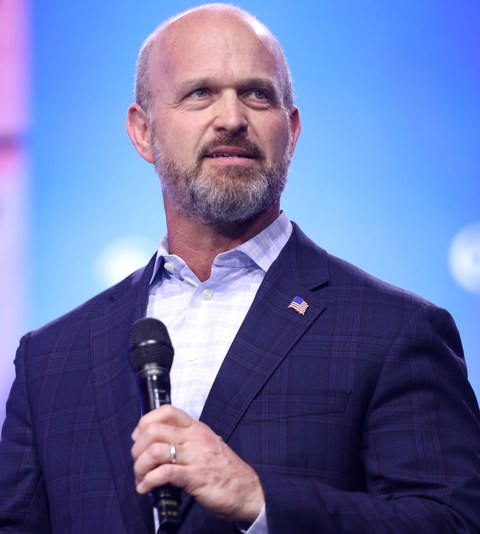
Kevin Roberts
Heritage president at the project’s launch
Photo: Gage Skidmore · CC BY-SA 4.0 · License · resized
Provided the foreword and institutional leadership. Heritage convened the coalition; the policy guide was published in April 2023.
Inspect the connection
Paul Dans
Project director and co-editor
Photo: Heritage Foundation / Jungle World
Co-edited the guide with Steven Groves and co-wrote its personnel chapter. Previously served at OPM in Trump’s first administration.
Inspect the connection
Steven Groves
Co-editor
Helped assemble the cross-agency policy guide. The editors and chapter authors are named in Heritage’s publication announcement.
Inspect the connection
John McEntee
Personnel recruitment
The former Trump presidential-personnel director joined the project as it launched its staffing database. This is a documented recruitment role.
Inspect the connection
Russell Vought
Executive Office of the President
Authored chapter 2; returned to lead OMB in the second administration. Follow his separate dossier for spending and workforce actions.
Inspect the connection Read the authored chapter Open the individual dossier →︎
Brendan Carr
Federal Communications Commission
Authored chapter 28 and became Trump’s FCC chair. His regulator’s decisions belong alongside his published program.
Inspect the connection Read the authored chapter Open the individual dossier →︎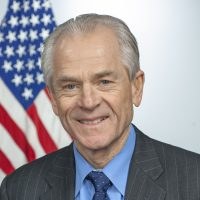
Peter Navarro
Trade
Photo: White House · public domain
Wrote the protectionist case in chapter 26. Kent Lassman supplied a competing free-trade case: the book does not have one agreed tariff position.Related passages: Tariff costs →︎
Inspect the connection Read the authored chapter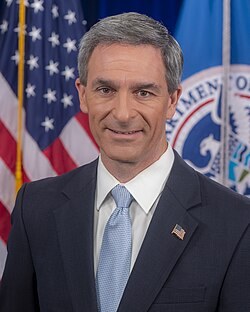
Ken Cuccinelli
Homeland Security
Chapter 5 author. Compare his proposals with the enforcement records of Noem, Homan, Bovino and Lyons; shared subject matter alone does not prove authorship.
Inspect the connection Read the authored chapter
Gene Hamilton
Department of Justice
Chapter 17 author, identified with America First Legal in the contributor list. The chapter makes the Justice Department a central place to examine presidential control.
Inspect the connection Read the authored chapter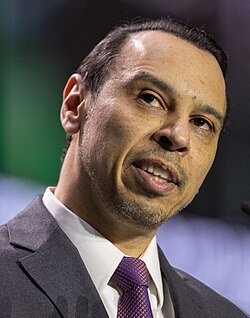
Roger Severino
Health and Human Services
Chapter 14 author. Use the original text to trace proposals affecting reproductive healthcare and the department’s direction.
Inspect the connection Read the authored chapter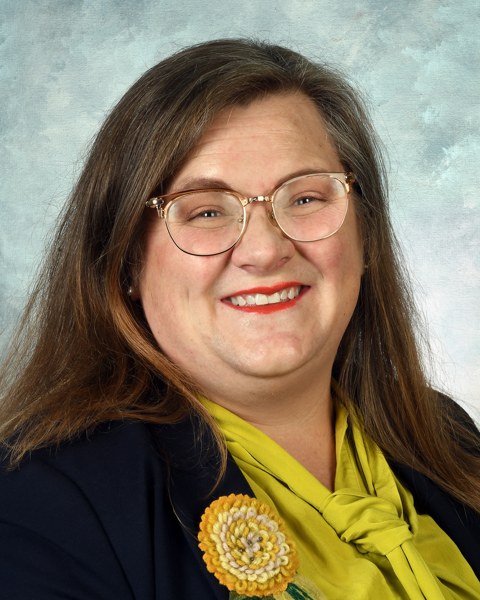
Lindsey Burke
Department of Education
Photo: LRC Public Information · Bud Kraft / David Hargis · CC BY-SA 4.0 · License · resized
Chapter 11 author. Her abolition proposal can be compared with the March 2025 instruction to Linda McMahon.Related passages: Linda McMahon →︎
Inspect the connection Read the authored chapter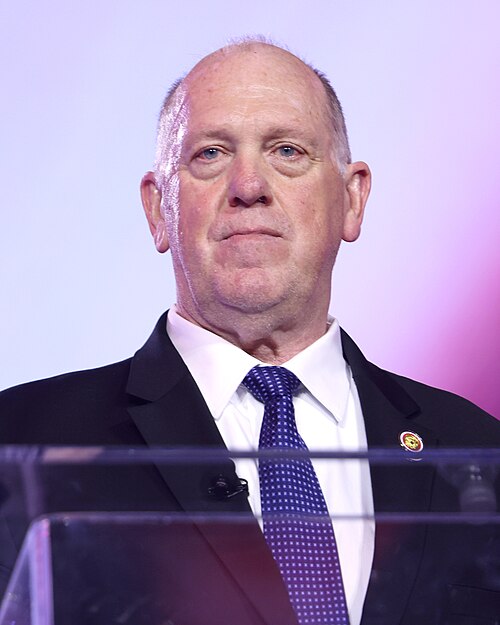
Tom Homan
Named in the book’s contributor list
Listed as a contributor; Ken Cuccinelli, not Homan, is the named DHS chapter author.
Inspect the connection Open the individual dossier →︎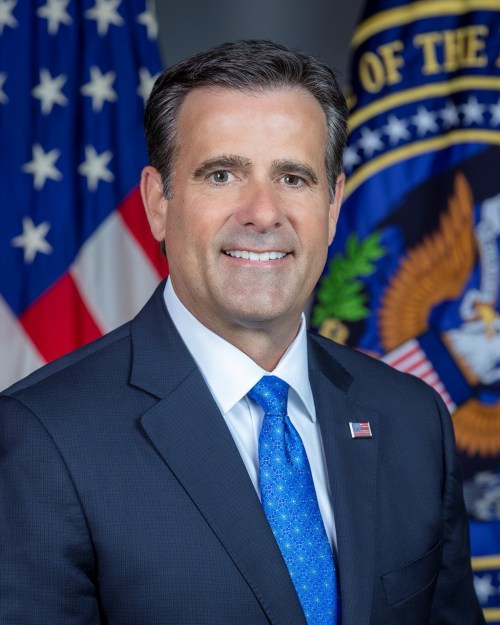
John Ratcliffe
Contributor and consulted intelligence official
Listed in the book; the intelligence chapter cites an interview with him. Dustin Carmack is its named author.
Inspect the connection Open the individual dossier →︎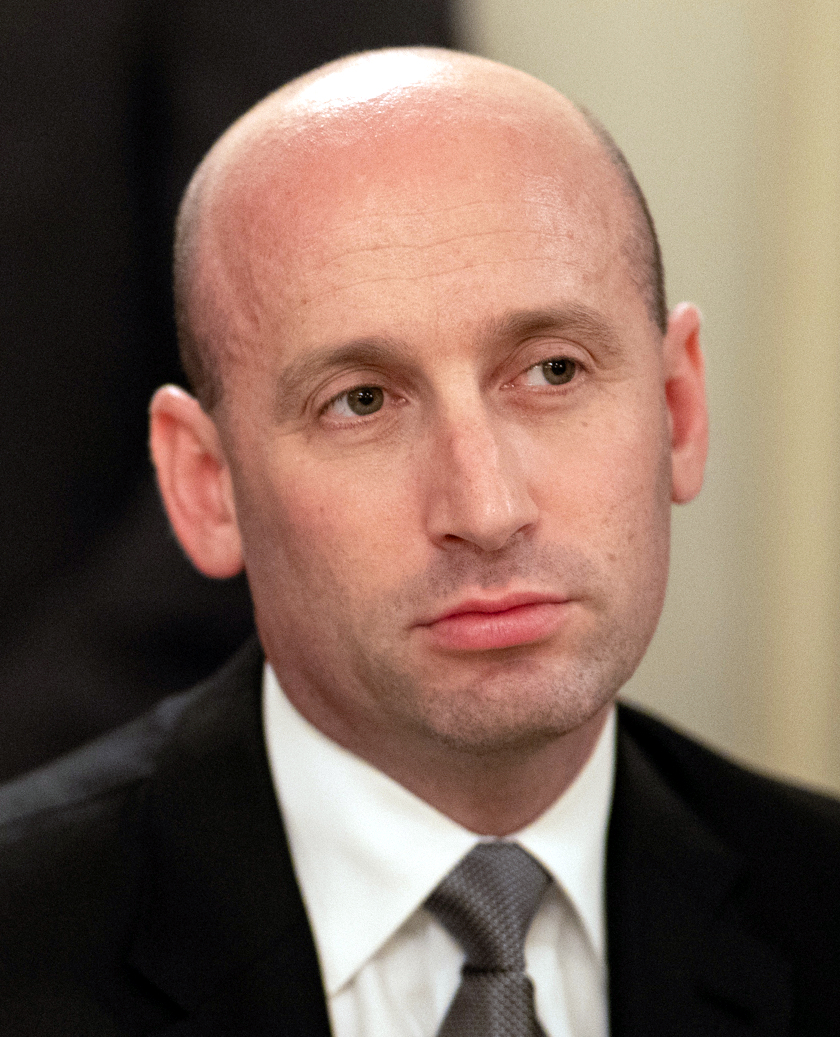
Stephen Miller
America First Legal
His organization participated in the advisory coalition. ABC reported its July 2024 request to leave the website’s advisory-board list. This is an organizational connection, not a chapter-author credit.
Inspect the connection Open the individual dossier →︎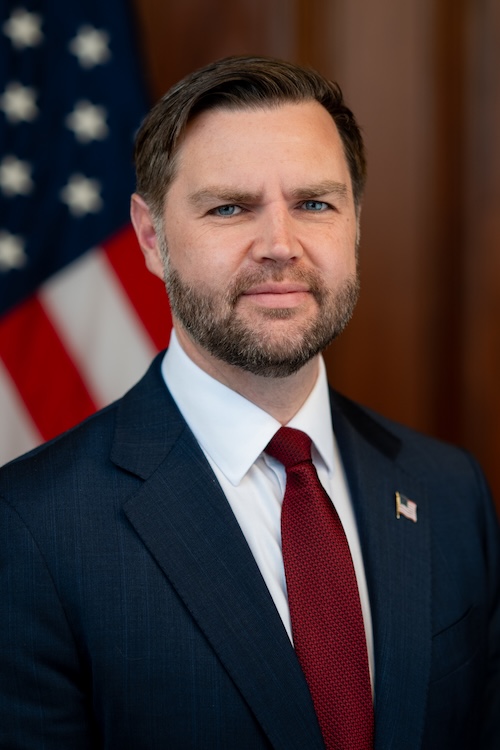
JD Vance
Foreword to Kevin Roberts’s separate book
Wrote the foreword to Dawn’s Early Light. That book is not the Project 2025 policy manual; Vance did not write the manual’s foreword.Related passages: Project 2025 →︎
Inspect the connection Open the individual dossier →︎03 · Compare the plan with the record
From proposals to presidential orders.
The overlap became visible in presidential orders: career-service protections, independent regulators and the Education Department all came under pressure. These records show what Trump ordered and what happened when those decisions reached court.
Records reviewed September 27, 2026. This is a selected documentary comparison, not a live completion score or a claim that the whole project has been implemented.
Executive order issued
Career-service protections
Trump restored and amended the Schedule F framework as Schedule Policy/Career. The order says affected employees need not personally support the president, but must faithfully implement lawful administration policy. It establishes a framework for reclassification; it is not a count of completed dismissals.
Executive order issued
Ending federal DEI programs
The order directed agencies to terminate DEI and environmental-justice offices and programs to the extent allowed by law, and to report their spending and staffing to OMB. Its text set the administration’s instructions; implementation fell to the agencies.
Executive order issued
Bringing independent regulators under White House review
Trump required significant regulatory actions from independent agencies to undergo White House review and gave OMB additional oversight functions. The order preserves an exception for Federal Reserve monetary policy. This is a dated expansion of presidential supervision, not a ruling on the legality of every later application.
Closure directed; not abolition by this order
An instruction to close the Education Department
Trump instructed the education secretary to facilitate closure within the law while maintaining services. The order itself does not repeal the statute creating the department. Compare its direction with the blueprint, then follow implementation and litigation separately.
Interim stay · not a final merits judgment
Education: the litigation stage
The Supreme Court stayed the injunction against the Education Department restructuring pending appellate proceedings. Its order allowed action at that stage; it did not abolish the department by statute. Read the short order separately from the accompanying dissent.Related passages: Education Department dismantling and staff reductions →︎
The organizations and the money
Follow the institution.
Then follow the restricted grant.
The convening organization
Heritage’s financial portal publishes annual reports, audited statements and a Form 990 link. Its stated donor-disclosure policy is to name donors with their approval. That means the published names are not a complete funding ledger.
Inspect Heritage’s financial recordsOrganization-wide income is not automatically Project 2025 funding. A claim about a particular donor financing a particular policy needs a designated grant, expense record or other direct evidence.
A coalition is not one bank account
Heritage announced 100 coalition partners in February 2024. The list identifies organizations associated with the project; it does not itemize their financial contributions or make each one an author of the policy chapters.
Read the coalition announcementHeritage reported more than $150 million in cash and commitments for 2023 across its work. That figure is not a verified Project 2025 budget.Related passages: Project 2025 →︎
Read the fundraising announcement04 · Before Project 2025
A blueprint with a history.
The name is new. The transition-planning tradition is not. These are selected predecessors in Heritage’s Mandate series, not a complete bibliography of every edition.
The original Mandate for Leadership
Heritage prepared a government-wide policy program for Reagan. The organization describes this as the start of its transition-blueprint tradition; its claims about adoption are its own assessment.
Read the historical sourceMandate for Leadership II
A follow-up addressed Reagan’s second term. Heritage identifies parallels with his 1985 inaugural program. Project 2025 belongs to an older effort to turn think-tank proposals into governing instructions.
Read the historical sourceA three-part program for the next administration
Heritage published Blueprint for Balance, Blueprint for Reform and Blueprint for a New Administration. These predecessors paired budgets with agency changes and presidential priorities.
Read the historical sourceAnother Mandate edition
Heritage marketed a further Mandate for Leadership for the 2020 cycle. The series continued between the first Trump transition and Project 2025.Related passages: Project 2025 →︎
Read the historical sourceProject 2025 takes shape
The transition project combined policy with recruitment and training. Heritage released The Conservative Promise on April 21, 2023, calling it the ninth Mandate edition.
Read the historical sourceProject 2025 and Agenda 2030 are separate projects
Project 2025 is distinct from the UN’s Agenda 2030. Similar-sounding labels are not evidence of a shared project.Related passages: Project 2025 →︎
05 · Watch the record
Hear how the project was sold.
Inside the training videos
ProPublica and Documented’s video investigation. Published August 2024.
Watch on YouTubeThe academy: Conserving America
A full Project 2025 training session published by ProPublica. Advocacy footage from the project itself, not an independent fact-check.
Watch on YouTube06 · Go to the document
Read it for yourself.
The full 2023 guide is hosted by Heritage. Chapter links use the PDF’s page position; the printed page number is 32 lower after the front matter. Use the contents and search within the document to check the surrounding argument.