Trump sells a health revolution. Follow the promises from the pharmacy counter to the bills families still face—and the evidence his administration asks them to trust.
TrumpRx, the cost of American care and Robert F. Kennedy Jr. in charge: one health agenda, tested against the experience of patients and the medical record.
At the pharmacy, in the ambulance and at the White House podium, the same question follows Trump’s health agenda: what does the promise actually deliver?
A drug discount makes a good headline. A family still struggling to pay for insurance tells a different story. Then there is Robert F. Kennedy Jr., whose claims now come with the authority of the federal health department. Follow the money families pay and the advice they are given, with the original footage and evidence alongside.
0.3%share of FDA-approved drugs listed by TrumpRx in CAP review
$26,993average 2025 family employer premium
$20,416average added pregnancy and childbirth cost
THE PORTAL VERSUS THE MARKET
TrumpRx covers a sliver of American medicine.
A discount can help the person who gets it. The harder question is how many patients the promise leaves behind.
At the pharmacy counter, the promise is easy to understand: pay less for the medicine you need. But a presidential name on a website does not tell you how many prescriptions qualify. Look across the shelves and TrumpRx’s reach shrinks dramatically. The figures below show the gap between the sales pitch and the medicines Americans actually use.
Figures are from a Center for American Progress review of the portal as of April 23, 2026, and the FDA drug count. The comparison separates drugs listed on the portal from offers providing new savings.
Unlike countries with socialized medicine, for instance the UK’s NHS, the United States finances care through employers, private insurers, Medicare, Medicaid and direct household payments. A patient can be insured and still owe a premium, deductible, copay, coinsurance or out-of-network balance.
The bill starts before anyone gets sick. Money comes out of the paycheck to buy insurance, then more charges arrive when the family needs care. KFF’s 2025 survey put the average annual family premium at $26,993, shared between employer and worker. Workers paid $6,850 of that themselves. After spending thousands to be covered, they still face deductibles and copays.
Having a baby brings another set of bills. In the pregnancy study, women with employer coverage paid an average of $2,743 out of pocket for pregnancy, delivery and postpartum care. The study used claims from 2021–23. The deductible shown above comes from a separate measure of single coverage, so it should not be added to the pregnancy figures. Read the pregnancy study →
A shocking bill is possible, but it is not the average.One insured patient was left owing $2,906 after a six-mile ambulance transfer. That is an individual case, rather than a typical bill: the commercial average shown above was $1,093. But it captures the anxiety behind the numbers. Even with insurance, an emergency can leave a patient wondering what the journey to hospital will cost.Read the ambulance case ↗
November 1 updateACA enrollment opens. The price of staying insured rises again.
November 1 brings the start of ACA enrollment for 2027—and another rise in the cost of coverage. KFF puts the average increase in benchmark silver premiums at 13%, following a 26% jump for 2026. These are premiums before subsidies; the bill each household receives depends on its plan and financial assistance.
For people priced out already, the consequences are arriving in hospital bills. CNN describes Holly Hendricks, 49, whose monthly premium roughly tripled to $1,100. She lost coverage in April. In September, sepsis put her in the hospital for a month; she expected the bill to exceed $500,000.
The enhanced federal premium tax credits expired at the end of 2025. Another enrollment season now opens with families deciding whether they can afford insurance—and what happens if they cannot.
Families need affordable care. They also need health advice they can trust. That brings the story to the man Trump put in charge.Meet the man Trump put in charge →
KENNEDY / THE CLAIMS / THE POWER
When personal theories become public power.
Trump gave Robert F. Kennedy Jr. control of the institutions families rely on for vaccine advice, disease prevention and medical research. That appointment turned his personal claims into a matter of public consequence. Parents hearing him speak were hearing the health secretary. The story is what he did with that authority—and whether the evidence justified the confidence of his claims.
Patients will not have to clear this extra hurdle.
The Trump administration tried to make Medicaid patients in Congress’s medical-frailty categories prove something more: that their condition significantly impaired their ability to meet the work requirement. Judge Richard Stearns struck that additional test from the rule on October 29.
The Massachusetts ruling protects people in the specified categories from the extra restriction, including patients with serious medical conditions and disabilities. The 25 plaintiff states and Washington, D.C., also received a six-month enforcement stay for medical-frailty determinations as they adjust their systems. The January 1, 2027, implementation deadline remains.
Health officials had proposed banning MGPI, a potent opioid derived from kratom. HHS changed its recommendation October 9 to permit specified concentrations. New York Times reporting traces the industry campaign behind that retreat.
David Gabbay, an executive at a major distributor, and his wife had given about $2.9 million to Republicans in 2026. A company-funded advocacy group took its case to the White House. The reporting follows the donations, lobbying and scientific dispute over the thresholds HHS adopted.
Kennedy spoke as though the answer had already been found: an environmental exposure had to explain rising autism diagnoses. He also described some autistic children as people who would never work, date or write a poem. For families watching, this was about more than a research promise. The country’s health secretary was telling them what futures he believed their children could have.
The National Institute of Mental Health describes a much wider spectrum of needs, challenges and strengths, with both genes and environmental factors potentially involved. Kennedy’s sweeping portrayal left that complexity out.
With measles spreading in Texas, Kennedy promoted reports of results from cod liver oil, an antibiotic and a steroid in a Fox interview. FactCheck.org traced the remarks to two local doctors, rather than an established measles treatment program.
The CDC’s distinction is clear: vitamin A may be used under medical supervision as part of care. It does not prevent measles or replace vaccination. An antibiotic may treat a secondary bacterial infection; it does not treat the measles virus.
17 of 17Sitting vaccine advisers removed from ACIP
Then Kennedy acted on the machinery of government. His department removed all 17 sitting members of the Advisory Committee on Immunization Practices, the panel advising on vaccine use. HHS said the wholesale replacement would restore trust. In a single move, the people responsible for that advice were gone.
Kennedy set a September deadline for finding what caused rising autism diagnoses. The administration reached September without that causal answer, then promoted a warning based on observational Tylenol research that already existed.
“We will know by September.”Kennedy promised that a new HHS effort would identify the cause.The original promise ↗
The deadline softened.The promised answer became “some of the answers,” with a broader report pushed further out.How the timetable changed ↗
Trump announced a Tylenol warning.The event supplied no new causal evidence. It elevated a disputed association into blunt medical advice.AP’s account of the evidence ↗
HHS restored the missing distinction.The department said association does not establish causation. Studies pointing in both directions had existed before the announcement.What the studies actually found ↗
Where the promise ended: Kennedy had promised a cause. By September, the administration was offering a warning drawn from observational research that already existed. It had not delivered the answer he said families would receive.
The bill is only part of the story. Patients also need medical advice they can trust. From disinfectant injections to vaccine myths, Trump used the presidential platform to promote claims that medical evidence did not support. Here are the actual remarks, the corrections and the people put at risk.
01–08 · Examine the claims
Medicines and vaccines
A presidency cannot turn a hunch into medicine. The footage shows how speculation and old vaccine myths acquired the authority of the White House.
01
Disinfectant inside the body
Dangerous speculation
What he said
Trump publicly asked whether disinfectant could be investigated for internal use, including injection. This was a presidential briefing, not an evidence-based treatment announcement.
What the evidence shows
A surface disinfectant is not an injectable medicine. CDC guidance warns against dangerous use of cleaning products, including swallowing or inhaling them. Trump floated internal disinfection in front of the briefing-room cameras, asking whether it could be investigated as a treatment.
In the same briefing, Trump suggested bringing powerful light into the body through the skin or another route to combat the virus.
What the evidence shows
The presentation concerned environmental effects on the virus. It did not establish a safe internal treatment. Trump jumped from disinfection outside the body to speculation about patients without clinical evidence. A laboratory observation about surfaces cannot supply that missing evidence.
Trump urged pregnant women to avoid Tylenol, with exceptions when medically necessary, and discouraged giving it to babies.
What the evidence shows
Acetaminophen is paracetamol, the medicine sold as Tylenol. The MHRA said there was no evidence that pregnancy use causes autism; it also warned that untreated pain and fever carry risks. Turning a disputed association into a presidential instruction to avoid treatment puts fear ahead of medical evidence.
At the Republican debate, Trump linked vaccination to autism through an anecdote about a child becoming ill after a shot.
What the evidence shows
An anecdote does not establish a cause. Large studies and WHO reviews reject a causal link between childhood vaccines and autism. Repeating this discredited story gives parents a reason to withhold protection against diseases that can seriously harm their children.
Trump recommended spreading smaller vaccine doses over years and separating the measles, mumps and rubella shots.
What the evidence shows
There is no established autism-prevention benefit from that advice. The combined MMR vaccine does not cause autism. Stretching out a schedule leaves children unprotected for longer; it is not a scientific remedy for an invented vaccine–autism connection.
Trump emphasized sexual transmission while saying newborns did not need hepatitis B vaccination.
What the evidence shows
Hepatitis B can pass from a mother to a baby during birth, between young children and through infected blood. WHO recommends vaccination within 24 hours of birth. His explanation left out precisely the routes that make early protection important.
Trump presented the Amish as evidence that avoiding vaccines and medicines prevents autism.
What the evidence shows
Autism has been documented in Amish communities. Their vaccination practices are not uniform, either. Limited prevalence research and differences in diagnosis cannot support his sweeping claim that autistic Amish people do not exist.
Trump repeated a rumor linking Cuba’s supposed lack of Tylenol to very little autism, while admitting he did not know whether it was true.
What the evidence shows
Cuba diagnoses autism and uses paracetamol. Drug shortages are not proof of an autism mechanism. Comparing countries without accounting for diagnosis and reporting cannot establish a cause. He broadcast an unverified rumor from the presidential podium.
Repeated assurances made a dangerous disease sound harmless, seasonal or irrelevant to children. The clinical record tells a different story.
09
An old medicine could not kill anybody
Dangerous assurance
What he said
Promoting chloroquine and hydroxychloroquine, Trump argued that their long use meant they would not kill anyone if the treatment failed.
What the evidence shows
Existing medicines can still cause serious harm. The FDA warned of dangerous heart-rhythm effects in COVID-19 patients and revoked the emergency authorization in June 2020 when the evidence no longer justified it. Familiarity with a drug is not a safety guarantee.
Trump claimed children were virtually immune to coronavirus while arguing for schools to reopen.
What the evidence shows
Children could become infected, and some required hospital care. A lower average risk than older adults is not immunity. His reassurance erased the risk to children and the people around them.
Trump asserted that testing showed almost all coronavirus cases were harmless.
What the evidence shows
Surviving an infection does not mean escaping harm. Serious illness and hospitalization occur in nonfatal cases. Testing did not establish his sweeping reassurance; it confused mortality with the full consequences of disease.
Trump predicted that the small recorded US case count would quickly shrink.
What the evidence shows
Recorded cases were not a complete count of infections. Public-health officials were warning of spread, and sustained transmission followed. His confidence minimized the threat at the moment the country needed preparation. Sustained transmission soon exposed the gap between that reassurance and the spread of the virus.
Trump suggested warmer weather would make coronavirus go away in April.
What the evidence shows
Temperature can affect survival outside the body. That does not establish that spring weather will stop transmission between people. His reassuring forecast was not a sound account of the emerging emergency.
Trump claimed a CDC study showed that 85 percent of people wearing masks caught coronavirus.
What the evidence shows
The study asked selected patients about behavior before illness. The share of infected respondents who reported mask use is not the infection rate among all mask users. Trump reversed the denominator and sold a case-control study as evidence that masks failed.
Invented health scares and denial of measured warming served an attack on environmental protections.
15
Wind-turbine noise causes cancer
Unsupported health claim
What he said
Trump told Republican supporters that people said wind-turbine noise caused cancer.
What the evidence shows
No scientific evidence supports that cancer claim. Noise can matter in local planning, but that is not evidence of carcinogenicity. The Department of Energy’s review describes no direct physical-health impact from wind-plant sound.
Trump repeatedly blamed offshore wind activity for whale deaths, including in his January 2025 remarks.
What the evidence shows
NOAA reports no scientific evidence that offshore wind survey noise causes whale deaths. Real threats require investigation and evidence, not a convenient accusation against renewable energy. An environmental impact question does not establish the specific cause he asserted.
In California, Trump dismissed a warming warning by predicting cooling. At the UN in September 2025 he again portrayed climate change as a deception.
What the evidence shows
Measured global warming and the influence of human emissions are established facts. Rejecting that evidence undermines preparation for heat and other climate-related hazards. Disagreement about a policy’s cost does not turn the physical record into a hoax.
These claims turned healthcare and disaster response into weapons against immigrants, transgender people and political opponents.
18
Springfield immigrants were eating pets
Unfounded attack on a community
What he said
Trump repeated the pet-eating story in the televised presidential debate, targeting immigrants in Springfield, Ohio.
What the evidence shows
Local officials had no credible reports supporting it. David Muir corrected the allegation during the debate. Trump amplified a racist rumor about an identifiable community instead of checking the evidence.
Trump alleged that children could go to school and return days later after a sex-change operation.
What the evidence shows
His campaign supplied no example establishing the scenario. Policies about names, pronouns or parental notification are not evidence that schools arrange secret surgery. KFF’s health-misinformation review identifies this as a false claim about transgender care.
Trump accused Democrats of supporting the killing of babies after birth, repeating the allegation during the debate.
What the evidence shows
No state legalizes killing a baby after birth. The moderator corrected him on air. Abortion and neonatal care are not infanticide; conflating them supplies outrage through a false account of medicine and law.
Trump claimed the administration spent hurricane-relief money on migrants, leaving storm victims without help.
What the evidence shows
The migrant-assistance grants had separate congressional funding. They were not money stolen from the Disaster Relief Fund. Treating all of an agency’s programs as a single pot obscured the actual appropriations and misled people during an emergency.
Trump presented the $750 payment while talking about people who had lost their homes, creating the impression that this was the help available.
What the evidence shows
It was immediate Serious Needs Assistance for essentials, not a ceiling on recovery aid. Eligible survivors could also receive housing, repair and other support. The correction matters: people should not be discouraged from applying by a false impression that substantial losses are answered with one small payment.
Now follow the decisions behind these claims in the policy record below.
THE DECISIONS BEHIND THE STORY
Follow the promise into the policy record.
The announcements are only the beginning. What changed for patients, and what happened to the institutions meant to protect them? The record below brings together drug prices, appointments, vaccine decisions and disease outcomes. Search by subject to follow a claim through to the decision behind it.
At a White House Cabinet meeting, Kennedy said HHS had launched a “massive testing and research effort” and would know by September what had caused the rise in autism diagnoses.
Trump placed Robert F. Kennedy Jr. at the center of health policy. During the first year, HHS changed vaccine recommendations, replaced or removed senior officials and reopened questions that mainstream medical bodies considered settled.
The White House turned a long-running observational research question into direct presidential medical advice without delivering the causal answer Kennedy had promised.
Trump and Kennedy repeatedly promoted or revisited claims linking childhood vaccination to autism, while administration policy narrowed several long-standing vaccine recommendations.
Measles cases rose as vaccination coverage continued a multi-year decline and vaccine skepticism gained unprecedented federal influence.
TrumpRx made drug pricing a presidential brand, but it does not operate like insurance and does not reduce hospital, procedure, ambulance or premium costs.
Prescription discounts address only one corner of what American households pay: premiums, deductibles, hospital and physician bills, emergency care, childbirth and services that fall outside insurance networks.
The contrast with Britain’s NHS is clearest at the moment care is needed: an American patient can be insured and still face premiums, a deductible, coinsurance and an out-of-network bill.
The decline is real. The argument is over how much each policy caused it and which patients received the savings.
KATIE ZACHARIA / THE WHITE HOUSE PODIUM
Trump gave the podium to someone who spread health scares.
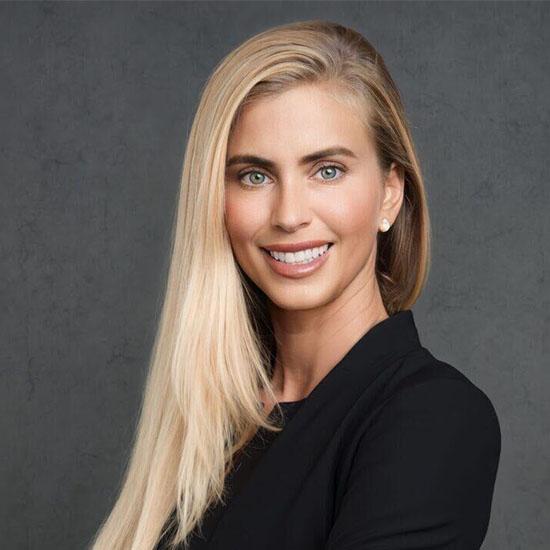
Robert F. Kennedy Jr. runs the health department. For five days in October, Katie Zacharia was the president’s chief spokeswoman. Her dismissal was reported on October 16, but the health claims she brought to the job remain part of this administration’s record.
In August 2026, Zacharia shared a false claim that eight in ten women miscarried after COVID vaccination, according to posts recovered by The Bulwark. For someone weighing a decision during pregnancy, that is a frightening message. The research tells a different story: a CDC analysis of nearly 2,500 pregnancies found a miscarriage risk of about 13% after adjusting for age, within the expected background range. It found no increased risk.
She also likened the abortion pill’s chemistry to the poison used in Nazi extermination camps. Mifepristone blocks progesterone; Zyklon B released hydrogen cyanide. Invoking the Holocaust supplies horror, not an explanation of how the medicine works.