Trump’s health disclosures have been part medical update, part promotion of his stamina and fitness for office. The documents tell a more specific story. Read what his doctors disclosed, how the explanations changed and what the public was still being asked to take on trust.
Presidential health is a matter of public accountability. Trump’s version often arrives as a superlative or a boast. The more revealing story is in the documents: who wrote them, what the doctors disclosed, and which details emerged only after further questions.
The glowing letter—and the doctor’s later account.
A medical letter should tell the public something independent about a candidate. In 2018, Harold Bornstein told CNN that Trump had dictated the glowing 2015 letter issued under the doctor’s name. Bornstein had previously defended its authorship. TIME reported no immediate response from Trump or the White House to the allegation.
That is a striking starting point for the disclosure record: the physician’s later account challenged the independence of a document meant to reassure voters. It does not erase every subsequent medical report. It does explain why authorship, dates and access to the original documents matter more than reassuring adjectives.
Explore the evidence behind this chapter
Who wrote the glowing 2015 health letter?
Harold Bornstein told CNN that Trump dictated the 2015 letter issued under his name. He had previously defended its authorship.
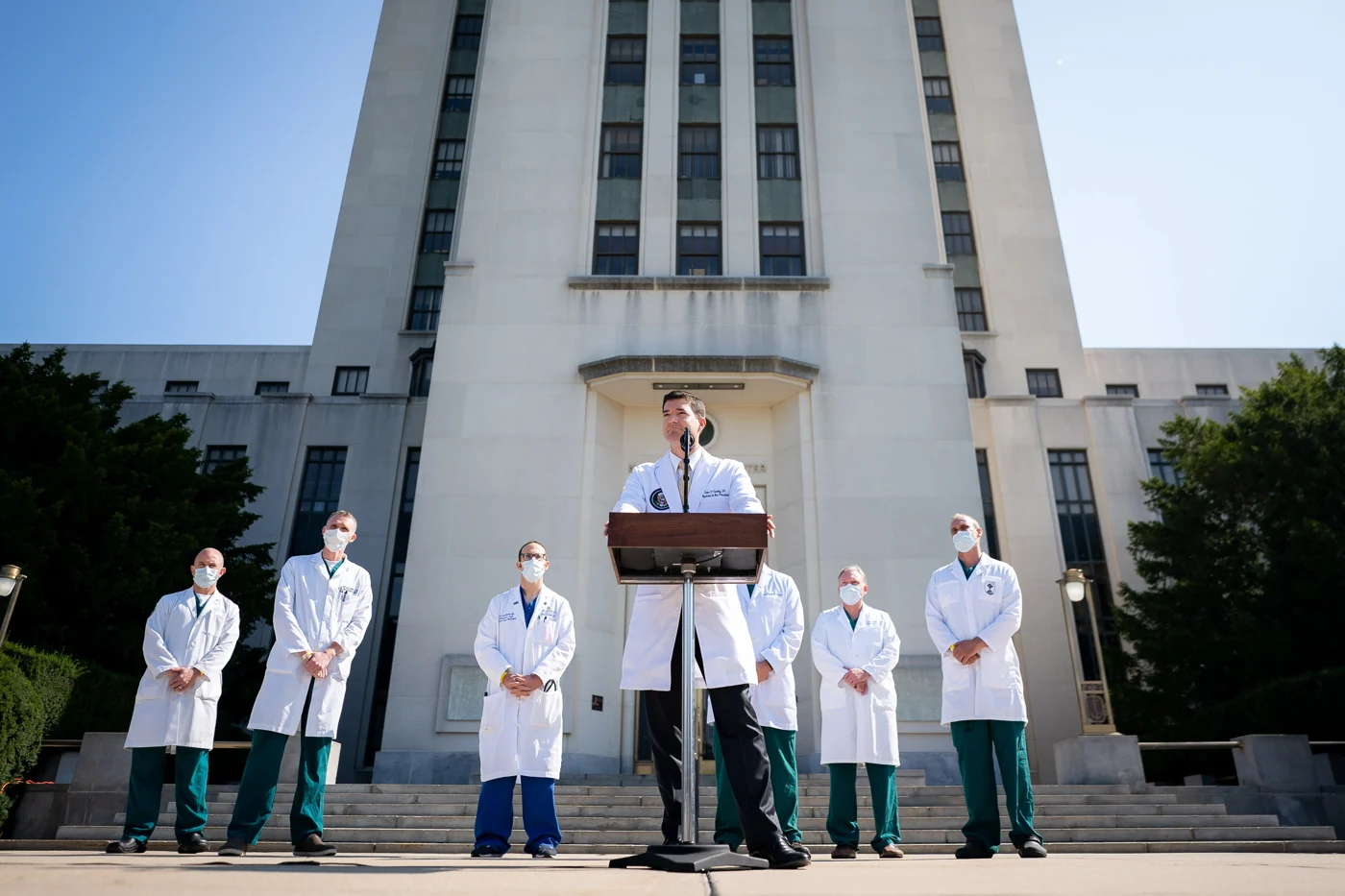
When Trump was hospitalized with COVID in October 2020, his medical team’s public explanation did not initially include the oxygen treatment. At the October 4 briefing, doctors disclosed oxygen-level drops, supplemental oxygen on October 2, 2020 and dexamethasone treatment.
The tension was between the reassurance offered to the public and the details disclosed afterward. The briefing transcript preserves the questions reporters asked and the doctors’ answers. It is a much stronger basis for scrutiny than a triumphant photograph or a carefully staged appearance.
COVID hospitalization: oxygen and steroid treatment disclosed
While Trump was hospitalized at Walter Reed, his doctors disclosed oxygen-level drops, supplemental oxygen on October 2, 2020 and dexamethasone treatment. Earlier public explanations had omitted the oxygen treatment.
Dr Sean Conley and the medical team brief reporters at Walter Reed, October 4, 2020. The questions about oxygen treatment belong to this briefing. Tia Dufour / White House · public domain ↗︎
03 · Health disclosures
A screening score becomes a boast.
Trump’s “person, woman, man, camera, TV” account made a memory task into a publicity moment. He was describing perfect cognitive-screening results as evidence of “extreme intelligence” by May 2026. That claim asks a screening test to establish something it does not measure.
MoCA is a cognitive screening tool, not an IQ score. Published physicians’ summaries report 30/30 results; those reported scores belong in the record. Turning them into a claim of exceptional intelligence is a separate assertion, and one that PolitiFact rated false. Repeating a result in several speeches also does not create several independently documented tests.
Ronny Jackson reported a 30/30 MoCA score following the January 12 examination. He said Trump requested the screening and that he had not initially considered it clinically indicated.
Trump said he had achieved four perfect results and described 30/30 as “extreme intelligence.” MoCA screens cognition; it does not establish exceptional intelligence or supply an IQ score.
The April 2025 physician summary recorded 224 lb and a normal neurological examination. In July, a further memorandum disclosed chronic venous insufficiency following lower-leg swelling, and attributed hand bruising to minor irritation from handshaking in the setting of aspirin use. These are dated medical disclosures, not diagnoses extracted from social-media photographs.
The May 2026 summary recorded 238 lb—14 lb above the earlier annual report—and again reported a 30/30 MoCA score. The physician recommended diet, activity and weight-loss measures while concluding Trump was fit for his duties. Those specific findings tell readers more than an unqualified declaration that everything is excellent.
The 2024 assassination attempt also generated a dispute over what struck his ear. The FBI ultimately said it was a bullet from the gunman’s rifle, intact or fragmented. That finding belongs here alongside the treating account, rather than leaving an unsupported glass theory to stand in for evidence.
Explore the evidence behind this chapter
Annual physical: 224 lb, 75 inches, MoCA 30/30
Sean Barbabella’s report covers the April 11 examination. It records the measurements shown above and a normal neurological examination, including a 30/30 MoCA score.
Following lower-leg swelling, Barbabella reported that venous ultrasound showed chronic venous insufficiency. The memo reported no evidence of deep-vein thrombosis or arterial disease, and no signs of heart failure or renal impairment.
The May 26 examination recorded 238 lb, 75 inches, blood pressure 105/71 and MoCA 30/30. Barbabella reported slight lower-leg swelling, improved from the previous year, and hand bruising associated with aspirin and minor irritation.
The FBI said Trump’s ear was struck by a bullet from the gunman’s rifle, either intact or fragmented. That wording does not identify which of those two forms struck him.
A large bandage became a potent political image after the shooting. The useful evidence is more specific: Ronny Jackson’s published treating account described the wound and dressing; the FBI’s later statement addressed the projectile. Neither the size of a dressing nor an online close-up settles those questions.
Watch the reporting on the FBI clarification, then read the original accounts. Scrutiny of a president’s health is strongest when it exposes missing information and misleading claims without replacing them with another rumor.
Explore the evidence behind this chapter
The injury and the bandage: Jackson’s letter
Jackson described a 2 cm wound reaching the ear’s cartilage surface, no stitches, and intermittent bleeding requiring a dressing. He said he had treated the wound daily after the July 13 attack.
The FBI said Trump’s ear was struck by a bullet from the gunman’s rifle, either intact or fragmented. That wording does not identify which of those two forms struck him.
Search the original collection, read the surrounding context and open the sources for each event.
CategoryAll
16 records · 16 shown
May 31, 2026 · Cognitive testing
“Extreme intelligence” and four perfect tests
Trump said he had achieved four perfect results and described 30/30 as “extreme intelligence.” MoCA screens cognition; it does not establish exceptional intelligence or supply an IQ score.
Read the context & sources
context
The reviewed medical disclosures support reported scores in 2018, April 2025 and May 2026. His October account is separately listed. This is not a complete verified test register. PolitiFact rated the intelligence interpretation false.
The May 26 examination recorded 238 lb, 75 inches, blood pressure 105/71 and MoCA 30/30. Barbabella reported slight lower-leg swelling, improved from the previous year, and hand bruising associated with aspirin and minor irritation.
Read the context & sources
context
The report recommends diet, activity and weight-loss measures while concluding he is fit for his duties. These are the physician’s findings; the public summary is not the complete clinical record.
Maternal-health event: another disputed appearance
The Daily Beast reported prolonged eye closure in footage from the event. The White House attributed the appearance to blinking.
Read the context & sources
context
The report distinguishes a still photograph from a longer video. This entry records the controversy; it does not determine whether he was asleep or identify a medical cause.
status
Publisher’s video account · White House response included
Following lower-leg swelling, Barbabella reported that venous ultrasound showed chronic venous insufficiency. The memo reported no evidence of deep-vein thrombosis or arterial disease, and no signs of heart failure or renal impairment.
Read the context & sources
context
This is a disclosed clinical explanation for the swelling. The same memo attributed hand bruising to minor irritation from handshaking in the setting of aspirin use. Photographs alone cannot establish a different cause.
Sean Barbabella’s report covers the April 11 examination. It records the measurements shown above and a normal neurological examination, including a 30/30 MoCA score.
Read the context & sources
context
The document records right-ear scarring and no extremity swelling at that examination. Later reports describe his condition at later dates.
The FBI said Trump’s ear was struck by a bullet from the gunman’s rifle, either intact or fragmented. That wording does not identify which of those two forms struck him.
Read the context & sources
context
There is no verified plexiglass evidence in the reviewed sources. Scripps’ footage review found both teleprompters intact. The apparent size of a wound cannot settle projectile identity; bullet fragments and glass are different explanations.
Jackson described a 2 cm wound reaching the ear’s cartilage surface, no stitches, and intermittent bleeding requiring a dressing. He said he had treated the wound daily after the July 13 attack.
Read the context & sources
context
Jackson was Trump’s former White House physician and a Republican congressman. His letter is distinct from the initial hospital chart, which this collection does not contain. Dressing size alone does not measure wound severity or prove deception.
AP reported that Trump supplied 6 ft 3 in and 215 lb during his Fulton County booking.
Read the context & sources
context
This is kept out of the physician chart. The different date and method mean it cannot by itself prove how much weight he lost or establish a deliberate lie.
COVID hospitalization: oxygen and steroid treatment disclosed
While Trump was hospitalized at Walter Reed, his doctors disclosed oxygen-level drops, supplemental oxygen on October 2, 2020 and dexamethasone treatment. Earlier public explanations had omitted the oxygen treatment.
Read the context & sources
context
The episode concerns his earlier illness and the information the White House disclosed at the time. The briefing and transcript preserve the questions and answers.
Harold Bornstein told CNN that Trump dictated the 2015 letter issued under his name. He had previously defended its authorship.
Read the context & sources
context
This is a specific, attributed challenge to the letter’s independence. The allegation concerns that letter’s preparation. TIME reported no immediate Trump or White House comment on the allegation.
Ronny Jackson reported a 30/30 MoCA score following the January 12 examination. He said Trump requested the screening and that he had not initially considered it clinically indicated.
Read the context & sources
context
The physician announced the result at the briefing. The completed test sheet was not released with that account.
TIME reported that a driver’s license obtained by Politico listed 6 ft 2 in, compared with the 6 ft 3 in stated by Trump and his doctor.
Read the context & sources
context
A license entry is not a current clinical measurement. The discrepancy deserves documentation, but photographs and visual comparisons do not resolve his exact height or establish intent to deceive.